







Occupational burnout is quietly undermining employees’ health and diminishing creativity within Hustle Culture. This article analyzes the causes, scientific impacts, and HRI Vietnam’s perspective on sustainable work.
Occupational burnout is no longer an isolated phenomenon; it is becoming a common consequence of Hustle Culture - a culture that glorifies constant busyness and relentless work. Slogans such as “sleep 4 hours, work 18 hours” or “those who rest fall behind” lead many to believe that high intensity is the only path to success, while in reality it silently erodes health, emotions, and creative capacity.

According to the World Health Organization (WHO), individuals who work more than 55 hours per week face a significantly higher risk of stroke and heart disease compared to those working within normal limits. Research from Harvard Business School also indicates that productivity does not increase beyond the 50-hour-per-week mark, but instead begins to decline sharply after exceeding 55 hours.
In this context, exhaustion does not stem from “not working hard enough,” but from prolonged stress that prevents the brain from recovering. When pressure remains high over extended periods, brain regions responsible for memory and creative thinking are suppressed, leading to reduced creativity, diminished problem-solving ability, and a decline in intrinsic motivation.
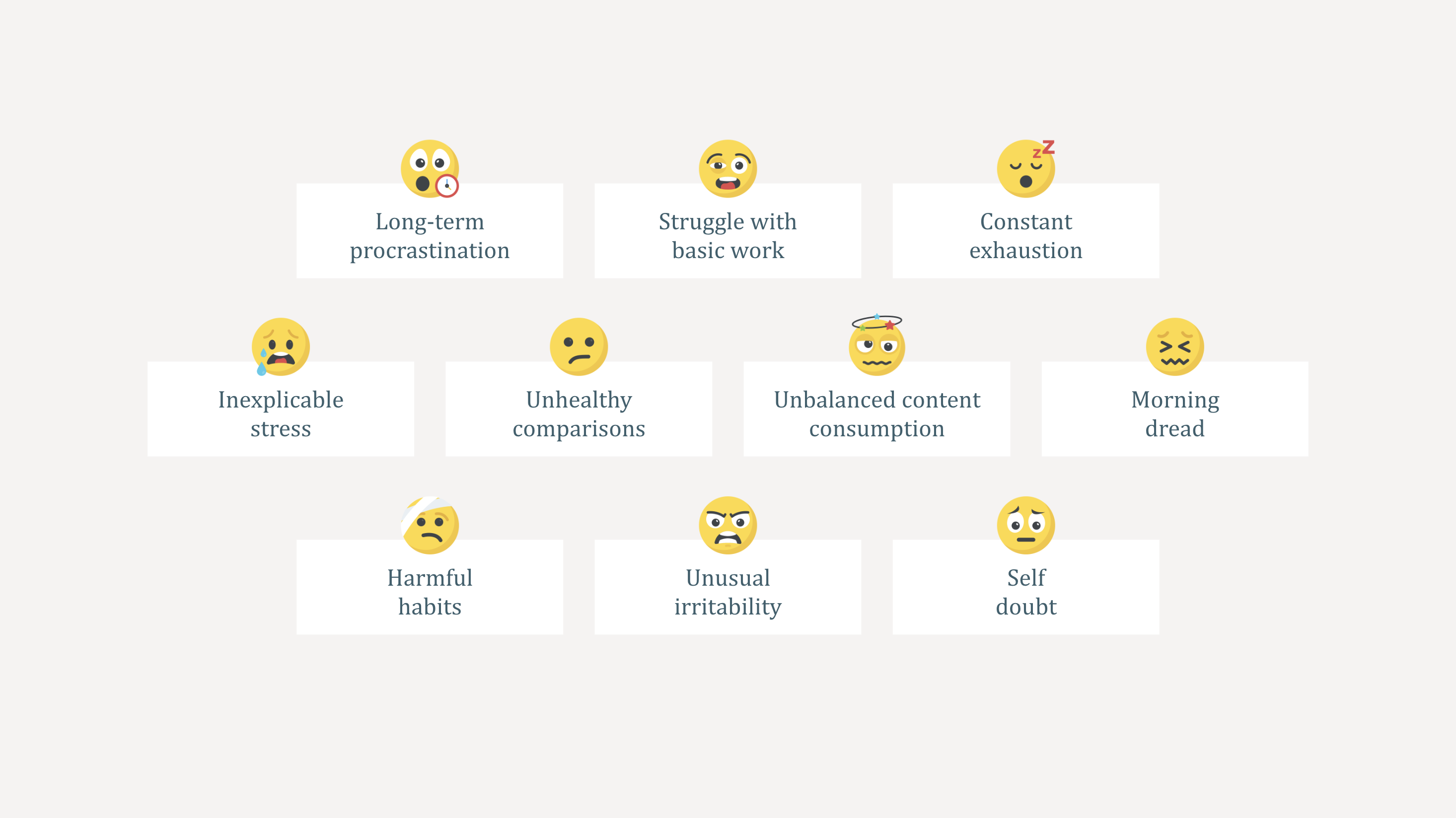
The danger of Hustle Culture lies in making people believe that rest equals failure. Driven by the fear of falling behind, many accept trading their health to maintain the image of being “always busy.” However, when the brain enters a prolonged state of overload, initial enthusiasm gradually fades, replaced by emptiness and loss of creativity.
At this stage, employees do not necessarily hate their work; they simply no longer have enough energy to stay engaged. Accumulated fatigue does not erupt immediately but builds up through each overtime session, each time rest is neglected, until the body and emotions are forced to speak up.
Working hard is not wrong, but working sustainably is the long-term strategy. To escape the cycle of exhaustion, employees need to learn how to manage energy rather than just manage time. Rest is not laziness; it is part of productivity. When the body recovers, the brain regains the conditions needed to restore creativity and intrinsic motivation.
Success is not a sprint, but a long journey. Those who know when to pause, adjust their pace, and establish healthy boundaries are the ones who can maintain performance without sacrificing their health.

>>> Learn more: TOP 10 REPUTABLE HEADHUNTING COMPANIES IN VIETNAM 2026
From HRI Vietnam’s perspective, occupational burnout is becoming a systemic issue in many modern organizations, especially in environments that emphasize Hustle Culture while lacking balancing mechanisms. With practical experience in human resources and a position among the Top 10 headhunting companies in Vietnam, HRI observes that when loss of creativity appears on a widespread scale, it is not merely an individual issue but a signal that the operating model needs adjustment.
HRI Vietnam believes that organizations seeking sustainable growth must redesign how work is structured, allocate resources more effectively, and build a culture that respects mental health. Proactively identifying and managing exhaustion at work not only helps retain talent but also lays the foundation for long-term performance and sustainable creativity.
Occupational burnout is not an inevitable price of success. When both organizations and employees recognize the issue correctly, it can be effectively managed — allowing passion to remain a driving force for long-term development rather than something that is worn away.
Customer support: hr@hri.com.vn
Hotline: 024 7300 6665