






“Productivity guilt” is the feeling of guilt when resting even after work has been completed, leading to a state of impaired mental recovery. This article analyzes the scientific perspective, psychological impacts, and HRI Vietnam’s viewpoint on sustainable work.
“Productivity guilt” is a familiar feeling for many modern individuals: even after completing their tasks, when sitting down to rest, watching a movie, or scrolling through social media, a persistent thought arises that they are wasting time. This sense of guilt pushes people to always “do something” to prove their self-worth, even when there is nothing left to do. Ironically, this invisible pressure causes both body and mind to become exhausted more quickly, reducing creativity and the ability to restore energy.

According to research from the University of London, the majority of office workers admit that they feel guilty when taking overly long lunch breaks or leaving their desks without a “legitimate” reason. This phenomenon is closely linked to “toxic productivity” — a culture that worships busyness, where people are taught that only constant work makes them worthy.
In such environments, the feeling of guilt when resting gradually forms as a psychological reflex. The brain begins to associate stopping with failure, disrupting the process of mental recovery. When this loss of recovery persists, individuals no longer have sufficient energy to create, think deeply, or make effective decisions, even as their working hours continue to increase.
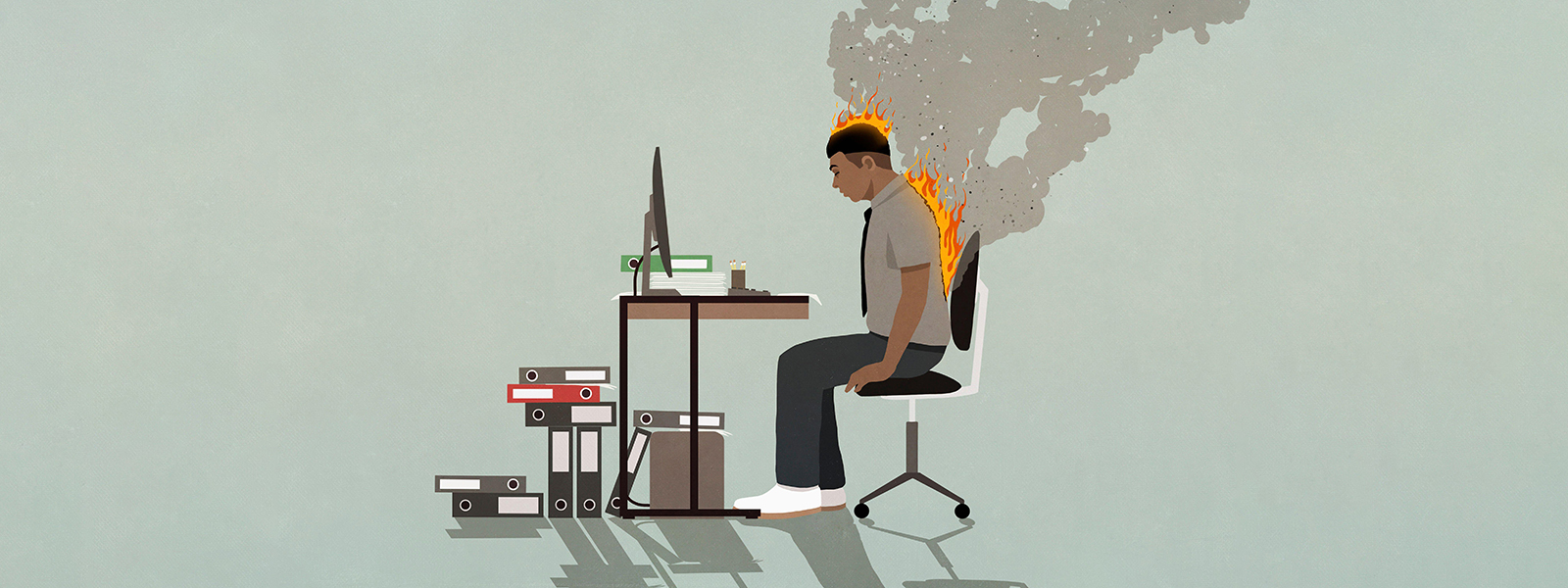
The danger of this state lies in the fact that it does not enhance effectiveness, but instead erodes motivation from within. When the brain has no space to rest, the creative network (the default mode network) becomes suppressed. Neuroscientific research shows that creativity and idea connection are strongest precisely when people are relaxed.
However, under the pressure to always be “productive,” many people do not allow themselves genuine rest. As a result, the loss of recovery becomes increasingly evident, accompanied by feelings of emptiness, reduced focus, and diminished enjoyment at work. Rest is no longer a source of renewal, but instead becomes a trigger for self-judgment.
To break free from this cycle, employees need to change how they view self-worth. Rest is not laziness, but an essential part of working intelligently. When individuals allow themselves to pause without self-judgment, true mental recovery can occur, enabling the brain to regenerate energy and creativity.
Sustainable work is not about doing more every day, but about maintaining a healthy pace for the long journey. Sometimes, doing nothing at all is the most effective way to prepare for the next phase of work.

>>> Learn more: TOP 10 REPUTABLE HEADHUNTING COMPANIES IN VIETNAM 2026
From HRI Vietnam’s perspective, productivity guilt is becoming a widespread issue in many modern organizations, especially in environments that emphasize performance while lacking recovery mechanisms. With experience working alongside many enterprises and a position among the Top 10 headhunting companies in Vietnam, HRI observes that when loss of recovery becomes prevalent across teams, it signals that the working model needs adjustment.
HRI Vietnam believes that organizations seeking long-term performance must build a culture that allows genuine rest, respects mental health, and evaluates effectiveness based on quality rather than hours worked. Properly recognizing and managing this phenomenon not only helps retain talent, but also lays the foundation for creativity and sustainable development.
Productivity guilt is not a measure of success. When people learn to rest without feeling guilty, this state can gradually be replaced by positive energy, allowing work to become more effective and meaningful.
Customer support: hr@hri.com.vn
Hotline: 024 7300 6665