Remote vs Hybrid: Which Direction Should Businesses Choose?
Dec 11, 2025 |
3,041 views
This article analyzes remote vs hybrid to help businesses choose the optimal working model. Based on cost, management, and productivity, the content clarifies how the remote hybrid model operates and the appropriate scenarios for application.
Table of Contents
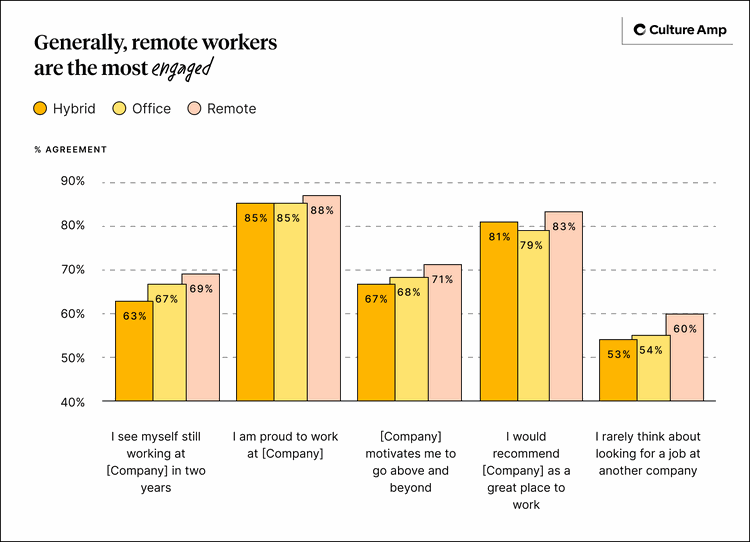
As the talent market shifts and businesses need to scale faster, choosing between remote vshybrid becomes a strategic operational factor. Each model offers different advantages, from cost optimization to maintaining internal connection. Remote brings flexibility and cost savings, while hybrid provides a balance between in-person interaction and personal autonomy. To make the right choice, businesses must understand how these two models affect productivity, work culture, and operational processes in the remote hybrid model. A deep analysis of these factors helps businesses determine the suitable direction for long-term projects.
What is Remote-first? Advantages and challenges when comparing remote vs hybrid
Remote-first fully prioritizes working from anywhere, where team members can work from any location. Most processes such as sprint meetings, task management, code reviews, or project collaboration happen online. This model suits businesses aiming to save operational costs, expand hiring reach, and build flexible teams.
However, in the comparison between remote vs hybrid, remote-first also comes with challenges such as difficulty controlling progress without a clear process, easy misinterpretation of requirements, or reduced team cohesion. To operate effectively in a remote hybrid model, businesses need transparent governance systems, stable communication tools, and consistent reporting processes.
Remote-first brings flexibility and cost savings when comparing remote vs hybrid
Hybrid-first in the remote hybrid model – The balance between flexibility and connection
Hybrid-first combines onsite and remote work, where businesses design alternating schedules to ensure flexibility while maintaining direct interaction when needed. This model fits projects requiring frequent brainstorming, complex business discussions, in-person sprint reviews, or cross-department collaboration.
In the remote hybrid model, hybrid-first offers clear advantages: employees can focus on coding while remote and enhance connection or clarify requirements when onsite. As a result, businesses save costs while maintaining project quality and stable progress.
Hybrid-first balances direct interaction and flexibility in the remote vs hybrid model
Remote vs Hybrid – Which model delivers higher productivity?
Work performance shifts significantly when businesses compare remote vs hybrid across different project types. For simple technical projects with stable requirements and clear Agile processes, remote-first allows deeper focus, eliminating commute time. This significantly boosts productivity during long sprints.
In contrast, projects with complex workflows, high volumes of business discussions, or cross-functional collaboration usually perform better with hybrid-first. Hybrid reduces requirement misunderstandings, increases decision-making speed, and improves output quality.
Businesses must evaluate their internal culture, management capabilities, and product characteristics to choose between the models in the remote hybrid model.
Productivity varies by project type when businesses compare remote vs hybrid
HRI Vietnam’s perspective on choosing remote-first or hybrid-first
Based on experience running hundreds of projects in Vietnam, Japan, and Singapore, HRI Vietnam finds that remote-first suits teams with strong autonomy, familiarity with management tools, and well-defined processes. Meanwhile, companies prioritizing security, handling complex business logic, or strengthening team connection often choose hybrid-first.
According to HRI’s observations, 2024–2026 will see strong growth of the remote hybrid model, where businesses no longer choose a fixed model but adjust flexibly according to product stages. When operated correctly, hybrid-first can blend the in-person interaction of onsite with the flexibility of remote, optimizing long-term productivity.
Should businesses choose remote-first or hybrid-first?
The decision between remote vs hybrid depends on process maturity, communication capability, security requirements, and the technical nature of the project. Remote-first offers cost savings and broader hiring pools, while hybrid-first provides a balance between flexibility and real-time interaction.
When businesses understand the differences between the two models and how they operate in a remote hybrid model, choosing becomes easier and more accurate.
Get consultation on choosing the right working model
Is your business unsure whether to choose remote vs hybrid for the upcoming project? HRI Vietnam is ready to advise on the optimal operational model based on cost, project type, and growth goals.