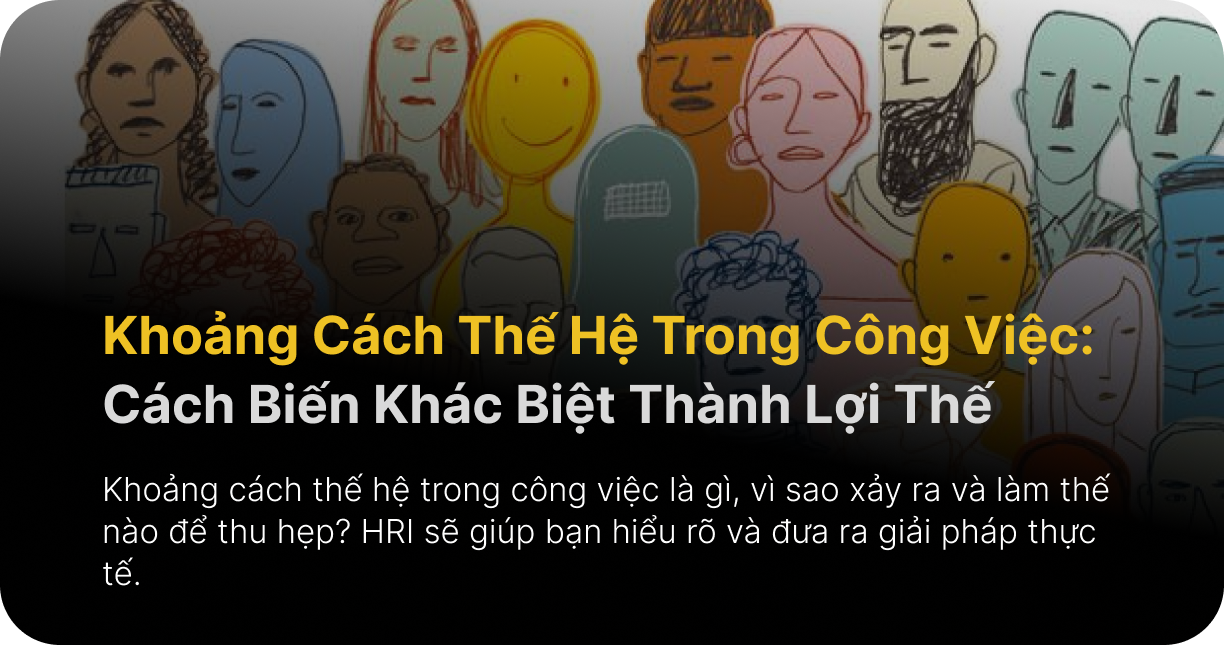
Generational Gap in the Workplace: Turning Differences into Advantages
Apr 28, 2026 |
1,185 views
What is the generational gap in the workplace, why does it occur, and how can it be bridged? HRI will help you understand it clearly and provide practical solutions.
Table of Contents
Generational Gap in the Workplace is becoming one of the most common challenges in modern organizations. When multiple generations work together in the same environment, differences in mindset, values, and communication styles can easily lead to conflict if not managed effectively. However, when leveraged properly, this diversity can also create opportunities to enhance performance and drive innovation.
1. What is a Generational Gap?
A generational gap refers to differences in thinking, behavior, life perspectives, and working styles among different age groups. These differences are shaped by each generation’s unique social context, technological exposure, and life experiences.
In the workplace, generational gaps often appear in communication styles, approaches to work, and career expectations.
The generational gap stems from several core factors:
Different social backgrounds: Each generation grows up under distinct economic and cultural conditions
Technological development: Unequal levels of access to and adaptability with technology
Value systems: Older generations prioritize stability, while younger ones value experiences
Communication styles: Differences between traditional and digital communication methods
Age bias: Stereotypes that negatively impact collaboration
These factors accumulate over time and create barriers in teamwork.
3. Signs of a Generational Gap
Generational differences can be recognized through:
Communication language: Variations in expression and formality
Technology usage: Differences in speed and proficiency with tools
Work attitudes: Discipline versus flexibility
Career perspectives: Long-term stability versus rapid growth
Identifying these signs early helps organizations proactively address potential conflicts.
4. Impact of the Generational Gap in the Workplace
If left unmanaged, generational gaps can lead to:
Reduced communication and collaboration efficiency
Increased internal conflicts
Lower team performance
Higher turnover rates, especially among younger employees
Additionally, a lack of mutual understanding can negatively affect company culture and talent retention.
5. How to Bridge the Generational Gap
To effectively manage a multigenerational workforce, organizations should implement the following strategies:
Develop mentoring programs Encourage knowledge sharing between generations to foster mutual learning
Diversify communication methods Combine face-to-face meetings, email, and digital platforms for transparency
Personalize development paths Tailor training and career progression to different age groups
Adopt flexible work models Offer remote or hybrid work options to meet diverse needs
Build a culture of respect Promote active listening, reduce bias, and increase understanding
Leverage diversity Utilize each generation’s strengths to boost productivity and innovation
Encourage multi-perspective decision-making Involve different age groups in key decisions
Building a Culture of Respect Across Generations
6. Benefits of a Multigenerational Workplace
When managed effectively, generational diversity brings significant advantages:
Diverse perspectives and thinking
Enhanced creativity and innovation
Improved internal communication
Better decision-making quality
This is a crucial factor for sustainable long-term business growth.
HRI Perspective
The generational gap in the workplace is an inevitable trend in today’s world. Instead of viewing it as a barrier, organizations should see it as an opportunity to build a more diverse and adaptable workforce.
Understanding the characteristics of each generation and applying appropriate management strategies will help reduce conflict, improve performance, and create a sustainable competitive advantage.