


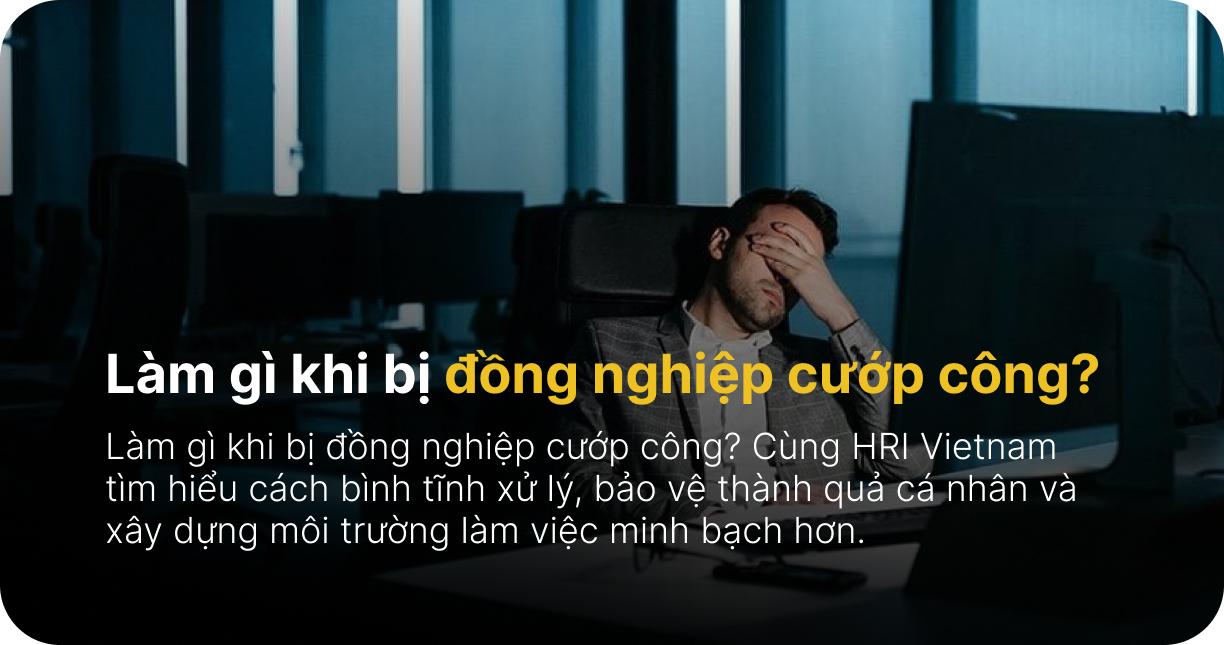




Being overshadowed or having your credit stolen at work? Discover smart ways to handle the situation, maintain a professional image, and regain your position without getting caught up in office drama.
Workplace pressure has never been only about KPIs or deadlines. For many people, the most exhausting part comes from silent conflicts within team environments — where the effort doesn’t always belong to the person who created the results. Among all forms of office drama, having a coworker steal your credit is one of the most frustrating and emotionally draining experiences.
You are the one who comes up with the ideas, builds the strategy, handles crises, and quietly pushes the project to the finish line. Yet when the final review meeting arrives, someone else suddenly becomes the “face” of the project, taking all the spotlight as if they were the key contributor behind the success.
What makes it worse is that most victims of office drama choose to stay silent. They fear conflict, worry about damaging workplace relationships, or think speaking up will make the environment more uncomfortable. However, prolonged silence sends a dangerous message: you are easy to overshadow and may continue to have your work taken by others in the future.
In many companies, office drama does not begin with major arguments. It starts with small compromises, moments of “just let it go,” and gradually develops into a long cycle of unfairness.
Not every act of taking credit happens openly. In many cases, office drama is hidden behind labels such as “team support,” “collaboration,” or “presenting on behalf of the team.” Recognizing the signs early can help you avoid becoming trapped in a passive position.
You share an idea during internal discussions, but when the official meeting begins, someone else presents it as if it were entirely their own idea.
This is one of the most common forms of office drama: stealing the spotlight by becoming the “representative voice” of someone else’s work.
In project summaries, reports, or achievement acknowledgments, your name is completely omitted even though you handled the most critical tasks.
This behavior often happens quietly but can be highly damaging because it directly affects performance evaluations and promotion opportunities.
Some people are nearly invisible throughout the implementation process but suddenly appear at the perfect moment — when the project begins showing results.
They actively join final presentations, communicate with management, and quickly position themselves as the “main contributor.” This is a classic office drama pattern in highly competitive workplaces.
They approach you asking for solutions, ideas, or help solving problems. Later, they present all that information as their own personal achievement.
Many cases of stolen credit happen this way because the original contributor has no clear proof showing they were the first to provide the solution.
Are you a victim of having your credit stolen at work?
People who love taking credit often try to “stand next to results.” They may contribute very little, but they always make sure to appear during important moments to create the impression that they are central to the achievement.
In office drama, visibility is often remembered more than the actual process.
Emotional confrontation usually escalates office drama and damages your professional image. Instead, handle the situation strategically and systematically.
When workplace credit disputes happen, emotions matter far less than data.
You should:
Save file edit histories
Keep emails and work-related messages
Record project timelines
Document tasks you directly handled
These records are not meant for attacking others but for protecting yourself from having your contributions denied.
The best way to prevent office drama is to make contributions transparent from the beginning.
You should:
Regularly update progress in group channels
Clearly assign responsibilities for each task
Send meeting recaps after important discussions
Confirm responsibilities through email instead of verbal agreements
When everything is clearly documented, opportunities for coworkers to steal credit decrease significantly.
One reason office drama continues is because information often passes through too many intermediaries.
Take initiative by:
Reporting directly when necessary
Participating in important review meetings
Regularly updating your personal achievements
Having one-on-one discussions with your manager about work progress
This helps leadership clearly recognize your contributions and reduces the risk of distorted information.
In the long run, the most effective defense against having your credit stolen is building a strong professional reputation.
When the team naturally associates you with:
Crisis management
Strategic thinking
Saving important deadlines
… it becomes much harder for others to steal the spotlight from you.
In office drama, professional credibility is the strongest long-term protection.
Speaking up to protect your work is necessary. However, handling it poorly can quickly turn you from the victim into the source of office drama.
That’s why you should follow these “3 Don’ts.”
Focus on facts, processes, and results instead of emotions or personal conflicts.
Professional people solve problems with evidence, not personal attacks.
Creating divisions only makes the workplace more toxic. If you discover a coworker stealing your credit, address it directly or through management and HR instead of spreading the story throughout the company.
This is one of the biggest mistakes professionals make.
An emotional social media post may provide temporary relief, but it can seriously damage your professional reputation, internal relationships, and future career opportunities.
Office drama is almost unavoidable in any workplace. And having your credit stolen by coworkers is one of the most frustrating experiences professionals face.
However, instead of silently tolerating it or reacting emotionally, you can handle the situation strategically through clear documentation, strong communication skills, and professional thinking.
In today’s competitive workplace, knowing how to protect the value of your work is an essential skill for sustainable career growth and maintaining the position you deserve. Learning professional ways to handle these situations will help you avoid being trapped in workplace drama.
Customer Support: hr@hri.com.vn
Hotline: 024 7300 6665