





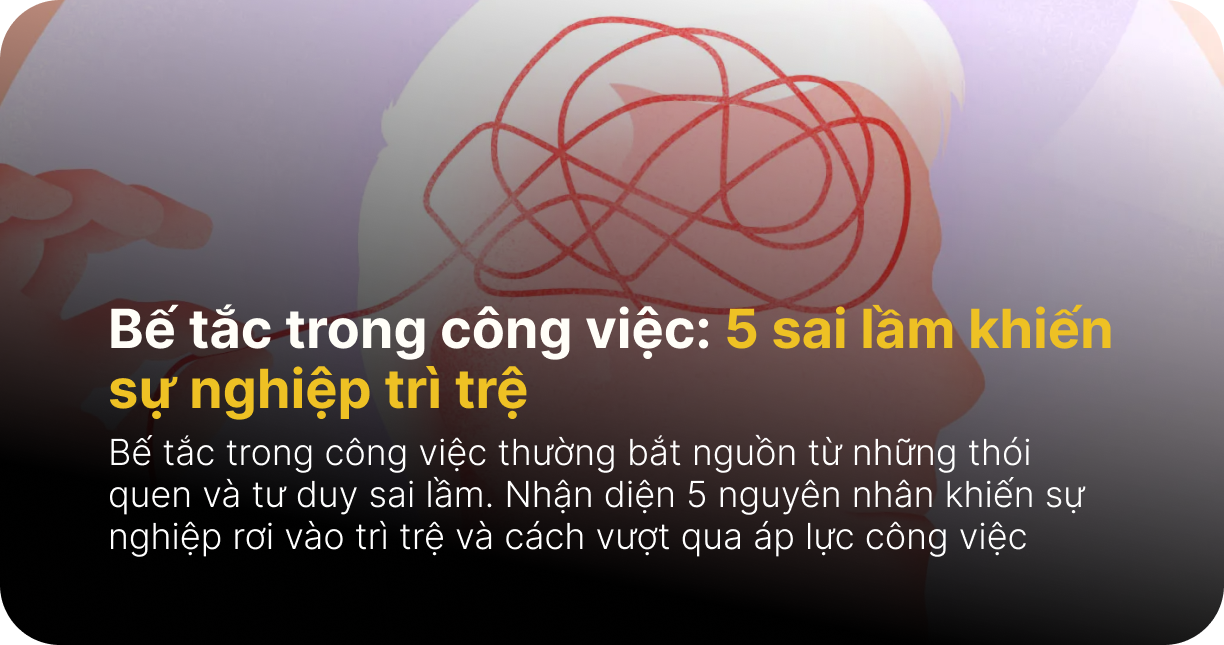
Career stagnation often stems from misguided habits and ways of thinking. Identify five common causes that can hold your career back and learn how to overcome work pressure to achieve sustainable professional growth.
Career stagnation does not happen overnight. It is often the result of repeated habits, poorly considered choices, and the way individuals respond to daily work pressure. Many people spend years working yet still feel they are “standing still” - unable to advance, losing motivation, and gradually feeling directionless.
In reality, a career rarely reaches a dead end suddenly. There are often early warning signs, but if they go unnoticed or unaddressed, you may slowly fall into a negative cycle. The following article analyzes five common reasons why people experience career stagnation and how to overcome them before it is too late.
One of the biggest causes of career stagnation is working without a clear long-term goal. When you do not define what you want to achieve within the next one to three years, you tend to work on autopilot - simply completing assigned tasks without a strategic plan for personal growth.
Without clear direction, it becomes easy to get caught up in daily work pressure while losing sight of the bigger picture. You may stay busy, but that does not necessarily mean you are making real progress. Over time, the feeling of “working hard but going nowhere” can significantly reduce your motivation.
To avoid this situation, set specific goals for each stage of your career: which skills you want to improve, what position you aim to achieve, and how you plan to increase your income. When your goals are clear, you will know what truly deserves your focus and which activities are unnecessary.

Many people choose to remain in a familiar position even when they know the job is no longer suitable for them. They fear changing environments, facing new challenges, or worry that they may not have the ability to take on a higher role. This mindset gradually makes career stagnation more evident.
A comfort zone provides a sense of stability, but it can also cause you to lose the motivation to learn and grow. When you stop updating your skills, avoid difficult projects, or fail to seek new opportunities for development, you may slowly fall behind others.
Work pressure can sometimes be a signal that you need to upgrade yourself. Instead of avoiding it, consider it an opportunity to improve. Change can be intimidating, but long-term stagnation is far more concerning.
Work pressure is almost unavoidable in modern workplaces. However, if you do not know how to manage it effectively, pressure can turn into prolonged stress that negatively affects both performance and mental well-being.
When you constantly work in a state of fatigue, lack of sleep, and stress, it becomes easier to lose focus, make mistakes, and see a decline in work quality. This not only leads to lower evaluations but also increases the feeling of career stagnation.
The solution is not to eliminate pressure entirely, but to learn how to manage it. You can allocate tasks more effectively, prioritize important responsibilities, and ensure proper rest. When you control pressure instead of letting it control you, you will maintain the clarity needed to make better decisions.

A career does not depend solely on professional expertise; it is also greatly influenced by communication skills and the ability to collaborate with others. If you perform well but cannot present your ideas effectively or build positive relationships with colleagues and supervisors, your opportunities for advancement may be limited.
Career stagnation sometimes does not come from a lack of ability, but from not being properly seen and recognized. Without strong connections, it also becomes harder to receive support when challenges arise.
To improve this, be more proactive in communicating, listening, and participating in team activities. The workplace is an ecosystem, and individual growth is always closely linked to the collective environment.
>>> Read more: Workplace communication: Why are competent employees still undervalued?
In a constantly evolving labor market, stopping the learning process essentially means removing yourself from the competition. If you rely only on existing knowledge without updating new skills, the risk of career stagnation becomes inevitable.
Many people delay learning because they feel too busy or overwhelmed by work pressure. However, this delay gradually causes them to fall behind. When opportunities appear, they may not have the capabilities needed to seize them.
Investing in yourself does not necessarily require expensive courses. You can begin by reading professional books, attending seminars, or developing soft skills. Proactively upgrading your abilities can open many new doors in your career.
Once you realize you are stuck in a stagnant situation, the most important thing is not to blame yourself but to take action. First, reassess your career goals and identify what truly makes you feel dissatisfied.
Next, create a clear improvement plan. This might include upgrading your skills, seeking new projects, or having an honest conversation with your manager about your development goals. Proactively changing your mindset and actions will help you regain control of your career.
At the same time, do not forget to take care of your physical and mental health. When your body is healthy and your mind is stable, you will have the energy needed to face work pressure more positively.
>>> Read more: Work pressure: 5 ways to overcome it when starting your first job
Career stagnation is not the end of the road; it is a warning sign that you need to adjust your direction. Causes such as unclear goals, fear of change, poor stress management, or a lack of continuous learning can all be improved if you are willing to take action.
A career is a long journey, and every stage comes with its own challenges. The most important thing is not to let yourself get trapped in a negative cycle and forget your true value and potential. When you actively change and continue developing, career stagnation can become a stepping stone for stronger breakthroughs in the future.
Customer support: hr@hri.com.vn
Hotline: (+84) 24 7300 6665