







Performance evaluation is an important step in human resource management. Discover four things organizations should avoid when evaluating employees to ensure fairness, transparency, and improved work performance.
Performance evaluation is one of the most important activities in human resource management, helping organizations measure how well employees complete their tasks, recognize individual contributions, and make decisions related to salary, bonuses, training, or promotion. When conducted properly, employee evaluation not only improves organizational performance but also motivates employees to develop in the long term.
However, in practice, many companies still face difficulties in the performance evaluation process due to the lack of a clear system or common mistakes. These mistakes can make employees feel that the evaluation is unfair, which may reduce engagement and work motivation.
To ensure that the employee evaluation process truly creates value, managers need to identify and avoid the common mistakes below.
Performance evaluation is the process of measuring and analyzing how well employees accomplish their tasks based on specific criteria such as work objectives, productivity, quality of results, and contribution to the organization. Through this process, companies can better understand the capabilities of each individual and make appropriate human resource management decisions.
Employee evaluation not only helps organizations monitor work performance but also plays an important role in human resource development. When employees receive clear feedback on their performance, they can identify their strengths to leverage and their weaknesses to improve.
In addition, performance evaluation helps organizations build a transparent working environment, where every effort is recognized fairly. This contributes to higher employee satisfaction and stronger engagement with the company.
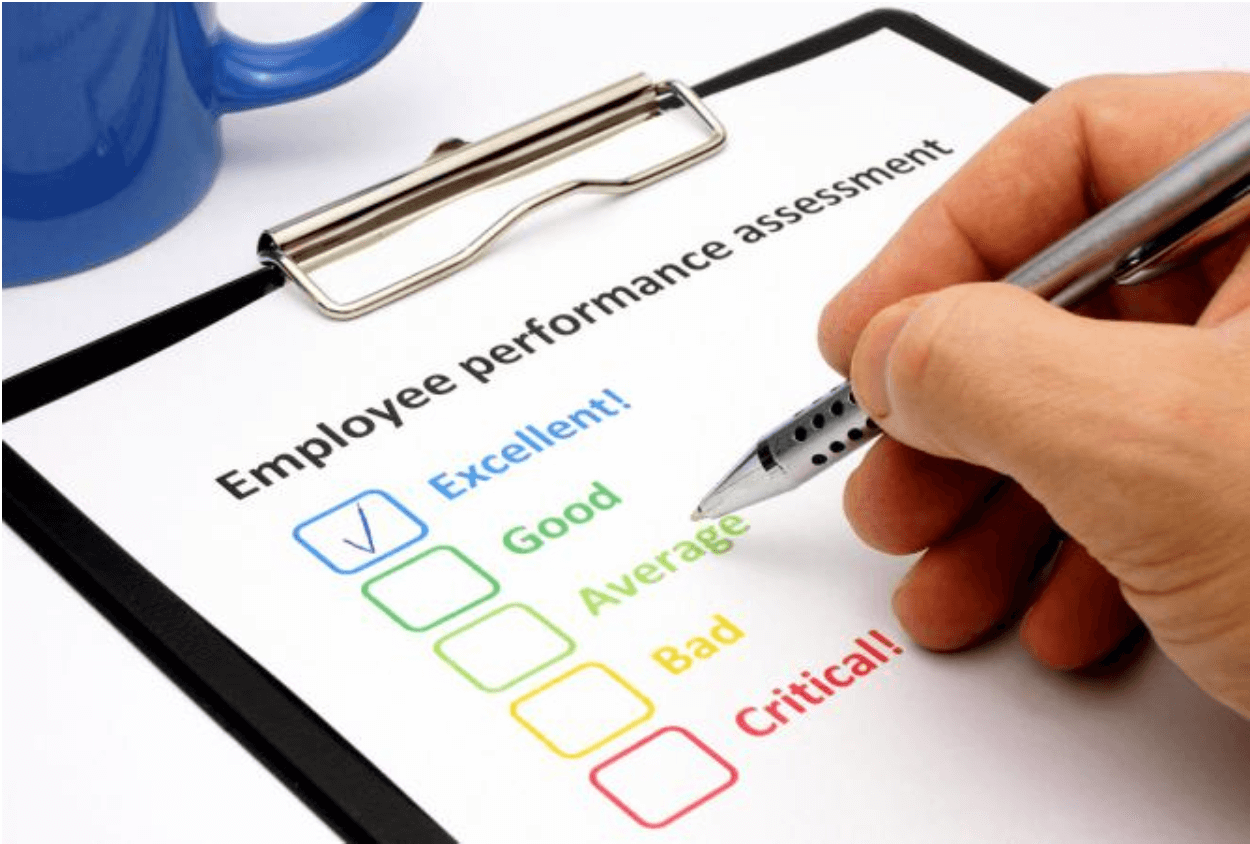
One of the most common mistakes in performance evaluation is allowing emotions or personal impressions to influence the assessment process. When managers rely on subjective feelings rather than concrete data, the evaluation results can easily become inaccurate and unfair.
For example, an employee with an outgoing personality who frequently communicates with the manager may be rated more highly, while employees who work quietly but effectively may not receive proper recognition. This can create dissatisfaction within the team.
To avoid this situation, companies should build a clear evaluation system based on specific indicators such as KPIs, work objectives, project results, or productivity. When employee evaluations are based on transparent data and standards, the level of fairness can be significantly improved.
Many companies only conduct performance evaluations at the end of a quarter or at the end of the year. This approach can make the evaluation incomplete because managers often remember only the most recent events.
This is known as the recency bias, where achievements or mistakes that occur close to the evaluation time tend to influence the final result more strongly. Meanwhile, earlier efforts of employees may be overlooked.
To make employee evaluations more accurate, organizations should adopt continuous performance monitoring. Holding regular feedback sessions monthly or after each project allows managers to gain a more comprehensive view of employees’ work performance.
In addition, frequent feedback helps employees adjust their working methods in time, thereby improving performance before the official evaluation period.
Another mistake in performance evaluation is providing only the evaluation results without clearly explaining the reasons or suggesting ways to improve. When employees receive vague comments such as “you need to try harder” or “your performance is not good enough,” they may not understand what exactly they need to change.
Effective feedback should be specific, constructive, and solution-oriented. For example, instead of saying “you did not meet the requirements,” a manager could explain:
“In the recent project, the completion time was three days behind schedule. If you improve your time management and coordinate with the team earlier, the results will be better.”
Providing detailed feedback during employee evaluations not only helps employees understand organizational expectations but also gives them opportunities to develop skills and improve their performance.
>>> Read more: Direct feedback – Why do employees often avoid it?
If the performance evaluation process focuses only on identifying mistakes or criticizing employees, it can become a major source of pressure rather than a development tool. When employees feel they are being overly scrutinized, they may become defensive or lose motivation at work.
An effective employee evaluation system should focus on long-term development. Besides pointing out areas for improvement, managers should also acknowledge employees’ achievements and efforts.
Balancing recognition and constructive feedback helps employees feel respected and motivated to improve themselves. This not only enhances individual performance but also contributes to building a positive organizational culture.
>>> Read more: Not meeting KPIs: Avoid it or face it?
To ensure that performance evaluation truly creates value, companies need to establish a clear and transparent evaluation system. First, evaluation criteria should be defined specifically and aligned with work objectives.
In addition, organizations should combine multiple evaluation methods such as manager evaluations, peer evaluations, and employee self-assessments. This multi-dimensional approach helps ensure that evaluation results more accurately reflect each employee’s capabilities.
Furthermore, HR management technology can support the evaluation process through performance tracking software, KPI systems, or OKR frameworks. These tools help organizations manage performance data in a more systematic and transparent way.
>>> Read more: Candidate evaluation: What factors do companies base it on?
Performance evaluation is not only an activity for reviewing work results but also an important tool for developing human resources. When implemented properly, employee evaluation creates a fair, transparent working environment and promotes the development of both individuals and the organization.
However, to achieve these benefits, companies need to avoid common mistakes such as subjective evaluation, evaluating only at the end of a period, providing unclear feedback, or turning evaluation into pressure. When managers understand the true role of performance evaluation and apply the right methods, it becomes a powerful tool for improving productivity and building a strong workforce.
Customer support: hr@hri.com.vn
Hotline: (+84) 24 7300 6665