




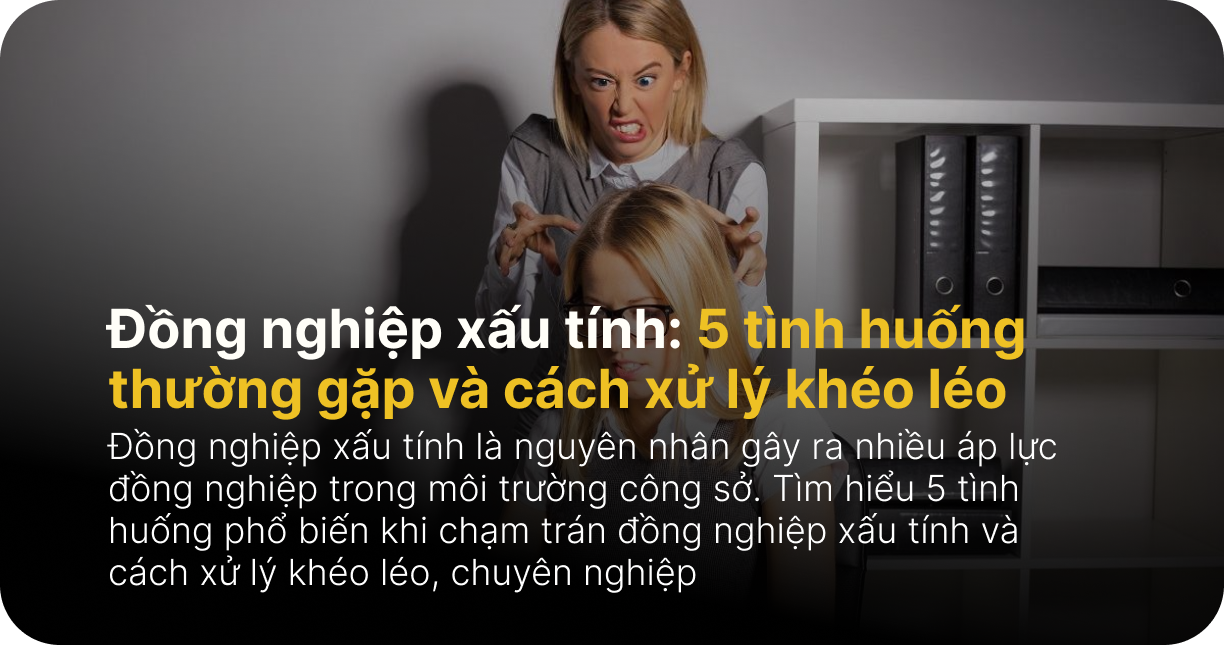
Toxic coworkers are a common source of workplace pressure. Discover five common situations when dealing with difficult colleagues and learn how to handle them tactfully and professionally.
The workplace is not only a place for career growth but also an environment where people must learn to adapt to many different personalities. Besides friendly colleagues who are willing to help, you may sometimes encounter difficult coworkers - people whose behavior can be unpleasant, uncooperative, or create unnecessary pressure during work.
If these situations are not handled skillfully, they can cause stress, reduce motivation, and negatively affect work performance. However, instead of reacting emotionally, understanding the situation and responding with the right strategy will help you remain professional and protect your personal reputation.
Below are five common situations when dealing with difficult coworkers in the workplace, along with suggestions on how to handle them wisely.
One of the most common signs of a difficult coworker is gossiping or spreading inaccurate information about others behind their backs. In the workplace, rumors can spread quickly and create unnecessary peer pressure, making the person involved feel uncomfortable or misunderstood.
When facing this situation, the most important thing is not to react impulsively or join the cycle of gossip. Instead, stay calm and focus on your work. When you consistently maintain a professional image, rumors often lose their influence over time.
If the rumors seriously affect your reputation or job performance, you may choose to address the issue directly with the person involved in a respectful and straightforward way. Clear communication can help prevent misunderstandings and reduce the chance of similar situations happening again in the future.

Another form of coworker pressure occurs when someone deliberately avoids responsibility and passes difficult tasks to others. This not only increases your workload but can also create a sense of unfairness within the team.
To handle this situation, you need to set clear boundaries in your work. When receiving tasks, confirm the specific scope of responsibilities through email or clear communication with your manager. This helps prevent others from easily pushing their work onto you.
In addition, you should learn to say “no” politely but firmly when a request falls outside your responsibilities. Being straightforward while maintaining a professional attitude will help you protect your interests while preserving stable relationships with colleagues.
In some cases, difficult coworkers tend to criticize others negatively instead of offering constructive feedback. Unkind remarks, especially in front of others can create workplace pressure and make you lose confidence.
When facing this situation, it is important to distinguish between professional feedback and personal attacks. If the comment is work-related, consider it an opportunity to improve. However, if it is purely personal criticism, you should not let it affect your emotions too much.
An effective response is to stay calm and focus on the work issue. For example, instead of arguing, you might respond: “Could you give more specific feedback so I can improve this part?” This approach shows professionalism while discouraging baseless criticism.
>>> Read more: What is a Frenemy? How to deal with two-faced coworkers in the workplace
A common situation in the workplace occurs when someone takes credit for results that you or the entire team worked hard to achieve. This behavior can be frustrating and increases coworker pressure, especially when personal achievements are linked to performance reviews or promotion opportunities.
To avoid this situation, you should proactively update your manager or team on work progress through emails, reports, or meetings. Transparent communication helps everyone understand each person’s role in the project.
Additionally, when working in teams, you can suggest clearly dividing responsibilities from the beginning. When tasks and roles are well defined, it becomes much harder for someone to claim credit unfairly.
Not all difficult coworkers cause direct conflict. Sometimes, they constantly complain, spread negative energy, or repeatedly express dissatisfaction with work. However, these behaviors can still create long-term coworker pressure and affect the morale of the entire team.
When working with people who have a negative attitude, it is important to maintain emotional boundaries. Do not let constant complaints affect your own motivation.
Instead, focus on your personal goals and the positive aspects of your work. Maintaining a positive mindset not only helps you stay mentally stable but also strengthens your professional image in the eyes of colleagues and managers.
In the workplace, encountering difficult coworkers is almost unavoidable. However, how you respond to these situations determines how much pressure you experience.
One of the most effective strategies is to maintain professionalism in every situation. When you stay calm, focus on your work, and avoid unnecessary conflicts, the negative influence of others will be significantly reduced.
In addition, building positive relationships with other colleagues is equally important. A supportive professional network can provide motivation and reduce stress when you have to work in a high-pressure environment .
>>> Read more: Conflict with coworkers: What is the smartest way to handle it in the workplace?
Dealing with difficult coworkers is one of the most common challenges in the workplace. Behaviors such as gossiping, shifting responsibilities, or taking credit for others’ work can create significant coworker pressure and negatively affect your work experience.
However, instead of letting negative emotions take control, you can choose to respond with professionalism and emotional intelligence. By staying calm, setting clear boundaries, and focusing on your work goals, these uncomfortable situations become much easier to manage.
Every workplace includes many different personalities. The key is not to completely avoid difficult people, but to learn how to handle them wisely while protecting your professionalism and long-term career growth.
Customer support: hr@hri.com.vn
Hotline: (+84) 24 7300 6665