The current labor market: Which industries face the most severe talent shortages?
Dec 26, 2025 |
5,055 views
Explore the most talent-short industries in Vietnam’s current labor market such as IT, logistics, manufacturing, and healthcare. This analysis examines the causes of workforce shortages and recruitment trends to help businesses and workers make effective career and hiring decisions.
Table of Contents
Vietnam’s labor market is witnessing a clear imbalance between labor supply and demand. While the workforce remains abundant in quantity, many businesses continue to face serious difficulties in recruiting the right people with the right skills. This reality highlights a clear trend: it is not a shortage of labor overall, but a shortage of suitable talent, especially in industries experiencing rapid growth and strong impacts from digital transformation, globalization, and supply chain shifts.
The following article provides a comprehensive analysis of the industries facing the most severe talent shortages in Vietnam, based on labor market developments, actual recruitment demand, and current economic growth trends.
Vietnam’s labor market today: Recovery with strong polarization
After a prolonged period of volatility, Vietnam’s labor market has shown a clear recovery, particularly in major economic hubs and key industrial zones. However, this recovery has been uneven across industries. While some sectors are experiencing an oversupply of low-skilled labor, many others are facing serious shortages of skilled professionals with experience and the ability to adapt quickly to new working environments. This trend reflects an ongoing economic restructuring process, in which businesses no longer recruit based on quantity but instead prioritize quality, practical competencies, and the ability to generate long-term value.
Vietnam’s labor market is recovering but remains highly polarized
The most talent-short industries in Vietnam today
1. Information Technology and Digital Transformation
Information technology continues to lead the list of the most talent-short industries in Vietnam’s labor market today. The rapid pace of digital transformation across sectors such as finance, retail, logistics, and manufacturing has driven continuous growth in demand for tech talent. In particular, roles related to data, artificial intelligence, cybersecurity, cloud computing, and advanced software development are facing a serious “supply–demand imbalance.” Notably, while the labor market does not lack IT graduates, it suffers from a severe shortage of professionals with strong practical implementation skills, systems thinking, and experience in solving complex business problems.
2. Logistics and Supply Chain Management
Logistics and supply chain management have emerged as one of the most severely understaffed fields in recent years. The expansion of e-commerce, export manufacturing, and Vietnam’s ambition to become a regional logistics hub have significantly increased hiring demand for roles such as transportation coordinators, warehouse managers, supply chain planners, and import–export specialists. However, the availability of talent with strong managerial thinking, technological competence, and hands-on operational knowledge remains limited, making it difficult for many businesses to scale operations and optimize costs.
3. Manufacturing and Industrial Production
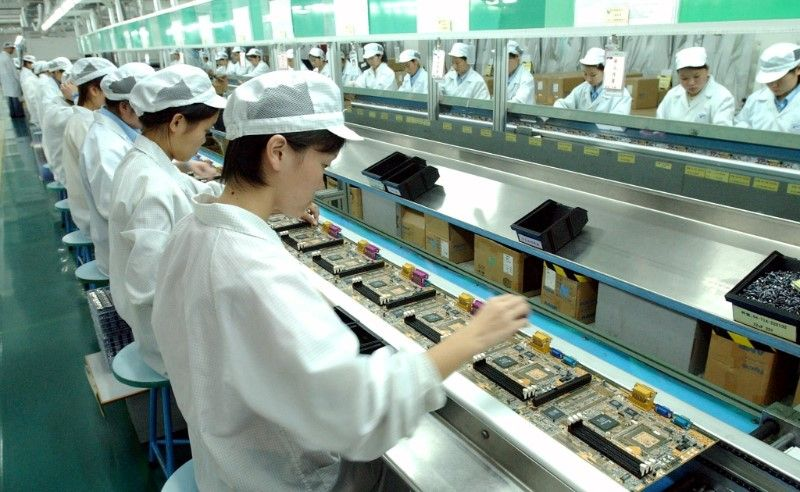
Manufacturing and industrial production continue to serve as pillars of Vietnam’s economy, especially amid rising foreign direct investment. The expansion of factories and industrial zones has generated strong demand for engineers, technicians, operations staff, maintenance personnel, and production managers. While the supply of general labor remains relatively abundant, companies face a serious shortage of highly skilled workers with expertise in automation, quality management, and modern manufacturing processes. This is why the manufacturing sector consistently ranks among the most talent-constrained industries in Vietnam’s current labor market.
4. Commerce, Services, and Retail
The recovery of domestic consumption and the rapid growth of retail chains and e-commerce platforms have created strong demand for talent in commerce and services. Positions in sales, customer service, store management, and chain operations are being recruited in large numbers. However, the key challenge lies in finding candidates who not only possess professional skills but also demonstrate strong service attitudes and long-term commitment, making talent acquisition difficult despite consistently high hiring demand.
5. Healthcare and Medical Services
Healthcare and medical services are under increasing pressure due to population aging and rising demand for comprehensive healthcare. Hospitals, clinics, medical centers, and home-care services are experiencing workforce shortages across multiple roles, including nurses, technicians, and healthcare management and operations personnel. This sector requires high professional qualifications, long training periods, and the ability to withstand significant occupational pressure, resulting in persistent talent shortages that are difficult to resolve in the short term.
6. Sales, Marketing, and Digital Marketing
As market competition intensifies, businesses are placing greater emphasis on sales, marketing, and brand development. This has driven rapid growth in demand for sales, marketing, and especially digital marketing professionals. However, the labor market lacks candidates who can effectively combine strategic thinking, data analysis, and practical execution. This shortage continues to place sales and marketing among the most talent-hungry sectors in Vietnam today.
7. Construction and Engineering
Construction and engineering also rank among the most talent-short industries in Vietnam’s labor market. Rapid urbanization and infrastructure development across many regions have increased demand for talent in this field. Nevertheless, roles such as civil engineers, MEP engineers, site supervisors, and project managers remain difficult to fill - particularly for large-scale projects and developments outside major urban centers.
There are multiple factors contributing to talent shortages across various industries. However, the core issue lies not in the quantity of labor, but in the misalignment between education and real-world demand. Rapid technological advancement, new business models, and increasingly complex skill requirements have outpaced the current education and training systems. In addition, unclear career orientation and high labor mobility have further intensified recruitment pressure on businesses, pushing many industries into severe talent shortages.
Recruitment outlook and recommendations
In the coming years, demand for talent in key industries is expected to continue rising, particularly for roles requiring specialized skills and high adaptability. For workers, investing in practical skills, technological thinking, and lifelong learning will be critical to capturing opportunities in Vietnam’s most talent-short industries.
Overall, Vietnam’s labor market is entering a phase of clear polarization, where opportunities are concentrated in industries with high value creation and strong potential for sustainable growth. Identifying the most talent-constrained industries in Vietnam not only helps businesses build effective recruitment strategies but also enables workers to develop long-term career paths aligned with the evolving direction of the economy.