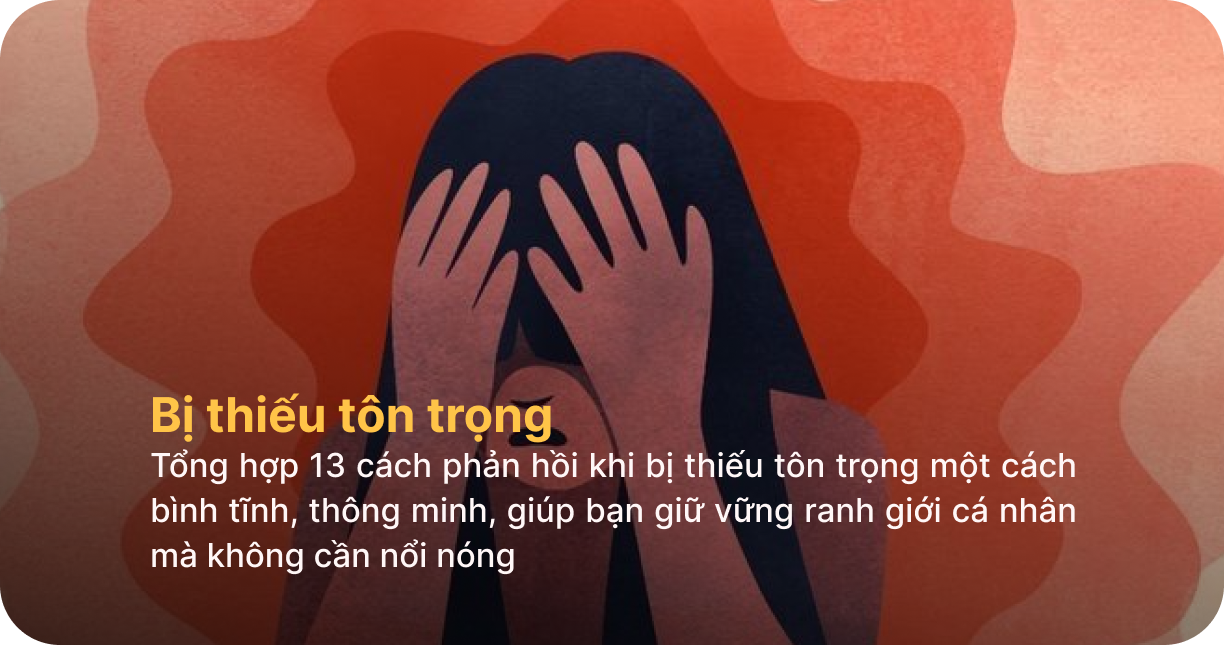
Disrespected? – 13 ways to respond without losing your temper
Jan 06, 2026 |
3,066 views
Being disrespected is a common situation in both work and daily life. This article explores 13 calm and strategic ways to respond to disrespect, helping you maintain your personal boundaries without losing your temper.
Table of Contents
In life and especially in the workplace - experiencing disrespect is often unavoidable. It may come in the form of sarcastic remarks, dismissive attitudes, interruptions, or unfair behavior in communication and work situations. When faced with disrespect, the way we choose to respond significantly shapes our personal image, relationships, and long-term career development.
Reacting with anger may provide temporary relief, but it often leads to a loss of self-control. In contrast, responding calmly, clearly, and strategically allows you to protect your self-worth while maintaining professionalism. Below are 13 effective ways to respond to disrespect without losing your temper, grounded in emotional intelligence and modern communication skills.
Why is it important to learn how to respond to disrespect?
1. Disrespect is common but often underestimated
In today’s workplace, disrespect does not always appear as direct conflict. Many people experience having their opinions dismissed, being ignored, or treated impolitely in ways that may not seem “serious enough” to confront immediately.
However, when disrespectful behavior happens repeatedly, it can quietly erode confidence, motivation, and psychological safety. Without effective responses, you may gradually be placed in a weaker position within professional relationships.
2. Negative emotional reactions often work against you
When confronted with disrespect, the natural human instinct is to defend or retaliate. Yet responding with anger, arguments, or sarcasm often escalates the situation and damages your professional image.
Those who can regulate their emotions not only remain clear-headed but also retain control of the interaction. A calm response helps you protect your personal boundaries without harming relationships or your professional reputation.
Why is it important to learn how to respond to disrespect?
13 Ways to respond to disrespect without losing your temper
1. Use intentional silence to regain control
Intentional silence is a strategic choice when you need time to manage your emotions. Not reacting immediately helps you avoid saying something you may later regret. This silence also creates space for the other person to reflect on their behavior. The key is to remain calm - silence should come from composure, not fear or avoidance. When used appropriately, it is a powerful response without words.
2. Ask neutral questions to seek clarification
Neutral questions are an effective way to respond without being confrontational. By asking the other person to clarify their intention or statement, you encourage them to reconsider and take responsibility for their words. This approach shifts the focus from emotion to content and demonstrates that you are composed and in control.
3. Respond from personal feelings rather than criticism
Instead of criticizing the other person’s behavior, share how it made you feel. Expressing your feelings clearly reduces tension and avoids creating a defensive dynamic. This method is especially effective in professional settings, where maintaining long-term relationships matters more than “winning” an argument.
4. Calmly and clearly restate your boundaries
Personal boundaries are essential for earning respect. When faced with disrespect, calmly restating your boundaries reinforces your self-worth without escalating tension. Clear boundaries help others understand what is acceptable and what is not, reducing the likelihood of repeated behavior.
5. Redirect the conversation to the core issue
When emotions rise, steering the discussion back to the main objective helps de-escalate the situation. This demonstrates that you prioritize solutions and outcomes over personal conflict. It is a key skill of professionals and effective leaders.
6. Maintain calm and confident body language
Body language often communicates more than words. A steady posture, consistent eye contact, and a measured tone convey confidence and emotional stability. Even without many words, composed body language signals that you deserve respect.
7. Acknowledge the disrespect tactfully
Gently pointing out disrespectful behavior helps the other person recognize the issue without feeling attacked. This approach balances honesty with constructive communication, particularly when you want to preserve the relationship while addressing inappropriate behavior.
8. Choose a better time for a private conversation
Immediate responses are not always ideal, especially in public settings. Addressing the issue privately at an appropriate time allows for more open and honest dialogue. This demonstrates maturity and strong situational control.
9. Stay professional and avoid personalizing the issue
Not all disrespect stems from personal hostility. By avoiding personalization, you reduce the risk of overreacting and maintain objectivity. Professionalism enables you to handle the situation rationally and effectively.
10. Avoid over-justifying or over-defending yourself
Excessive justification can place you in a weaker position and signal insecurity. Instead, respond briefly, clearly, and firmly. Calm decisiveness often carries far more impact than lengthy explanations.
11. Document and observe repeated behavior
If disrespectful behavior occurs repeatedly, noting patterns gives you a factual basis for addressing it. This is particularly important in workplace environments where feedback should be evidence-based. Preparation strengthens your confidence and credibility when you speak up.
12. Seek support when necessary
In serious or ongoing cases, reaching out to a manager or HR department is appropriate. This is not a sign of weakness but a step toward protecting your rights and maintaining a healthy work environment. Seeking support at the right time prevents unnecessary psychological strain.
13. Develop emotional intelligence
Emotional intelligence (EQ) is the foundation for recognizing, understanding, and managing your emotions. With strong EQ, you do not need anger to command respect. People with high emotional intelligence respond calmly and clearly, creating long-term positive influence in their relationships.
Conclusion
Knowing how to respond to disrespect without losing your temper is an essential skill in modern life and work. These 13 strategies not only protect your self-worth but also enhance your professional image and communication effectiveness. In the long run, calmness, clarity, and consistency remain the strongest foundations for earning genuine respect from others.